The forward nod: why classic U-pillows fail
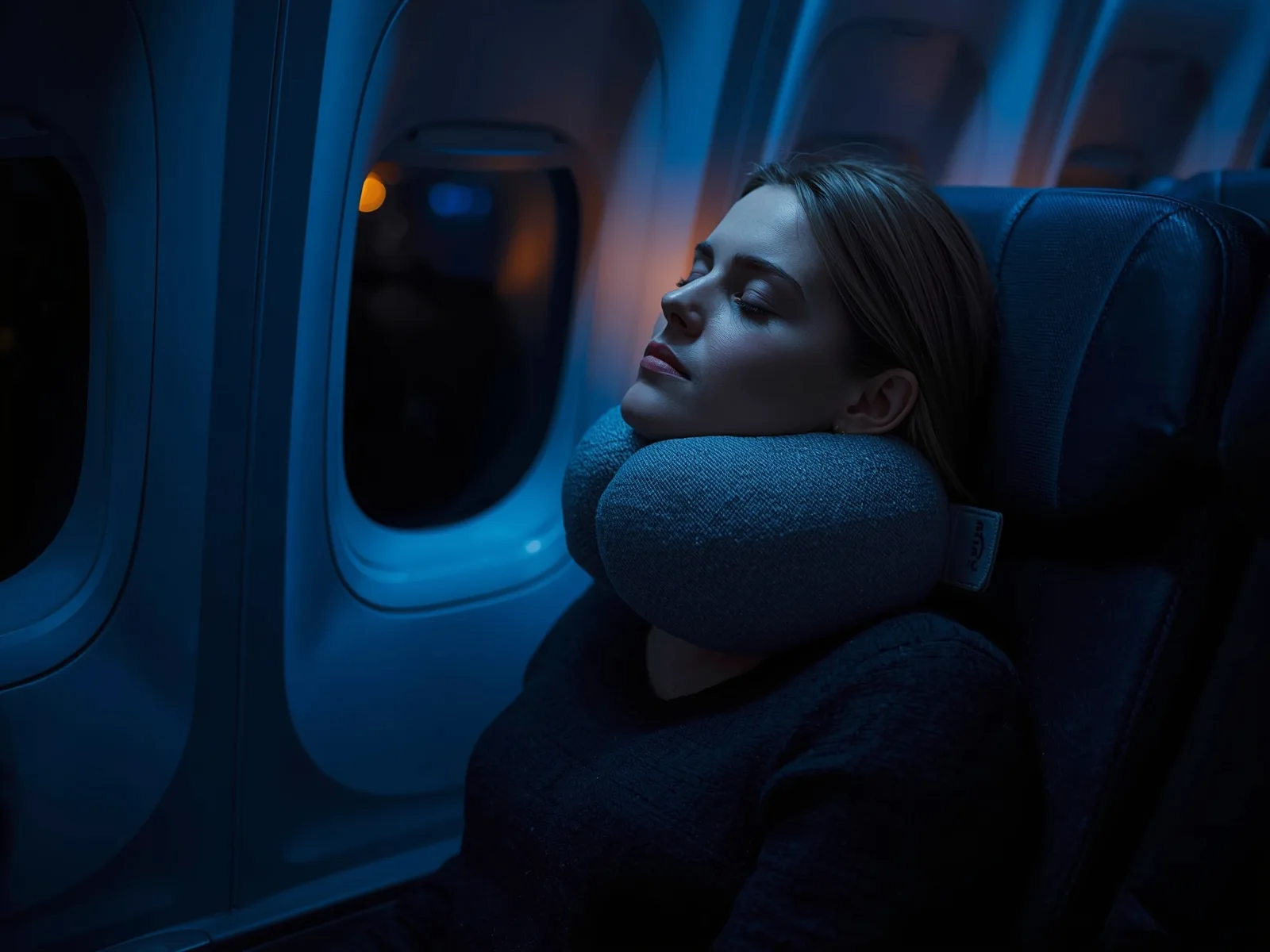
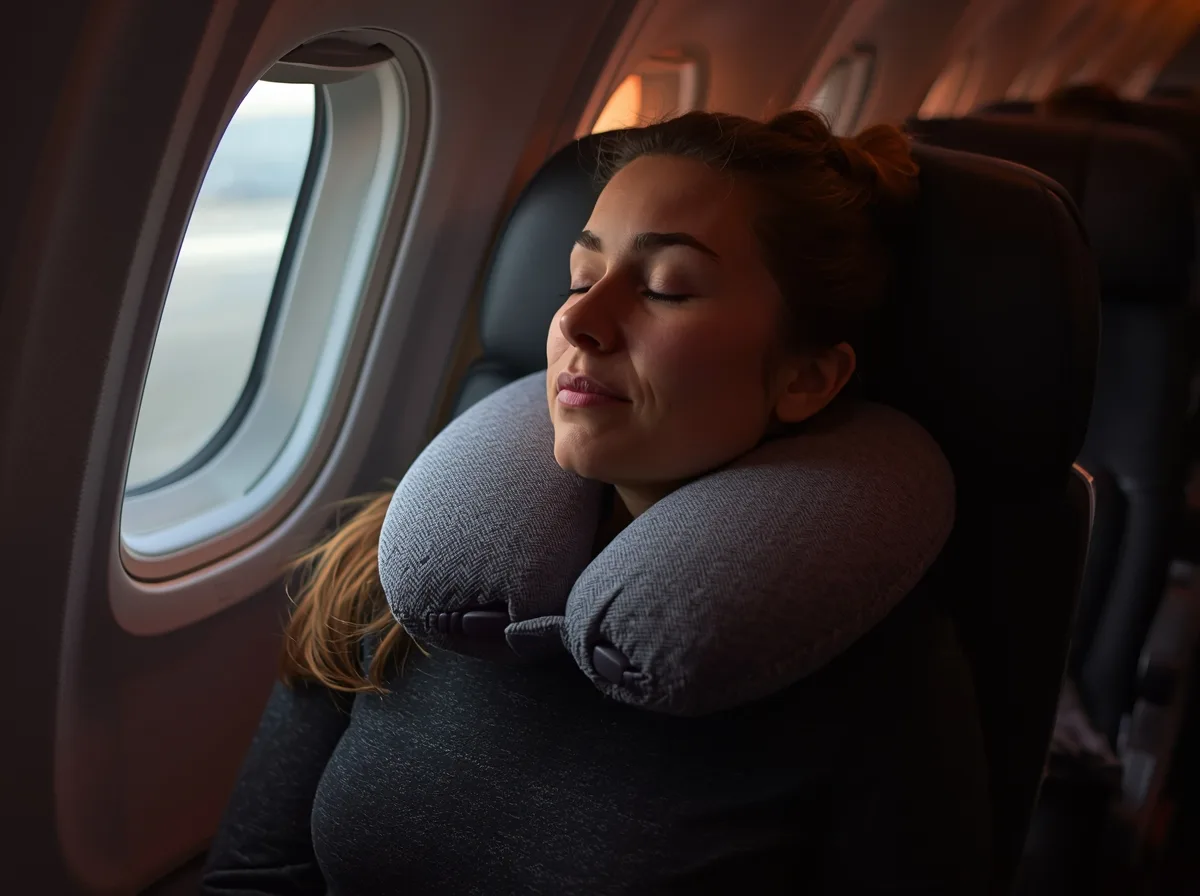
A sleeping head on an upright seat doesn't fall sideways — the seatback and window already handle that. It falls forward, chin to chest, because sleep releases the neck muscles that hold five kilos of skull balanced over the spine. The traditional U-pillow, open at the front, is a fence with the gate missing: it pads the two directions you weren't going and waves you through the one you were.
The fix is front closure — a pillow that meets under the chin and gives the jaw a shelf. When the neck muscles clock out, the chin lands on support instead of sternum, the airway stays open, and the micro-jolt wake-ups that shred airplane sleep simply stop happening. One geometric change, most of the benefit.
You can see the industry quietly admitting this: chin straps, wrap designs, and taller front profiles are everywhere now. We just started from the failure mode instead of retrofitting around it.
Memory foam density: the spec sheets don't show
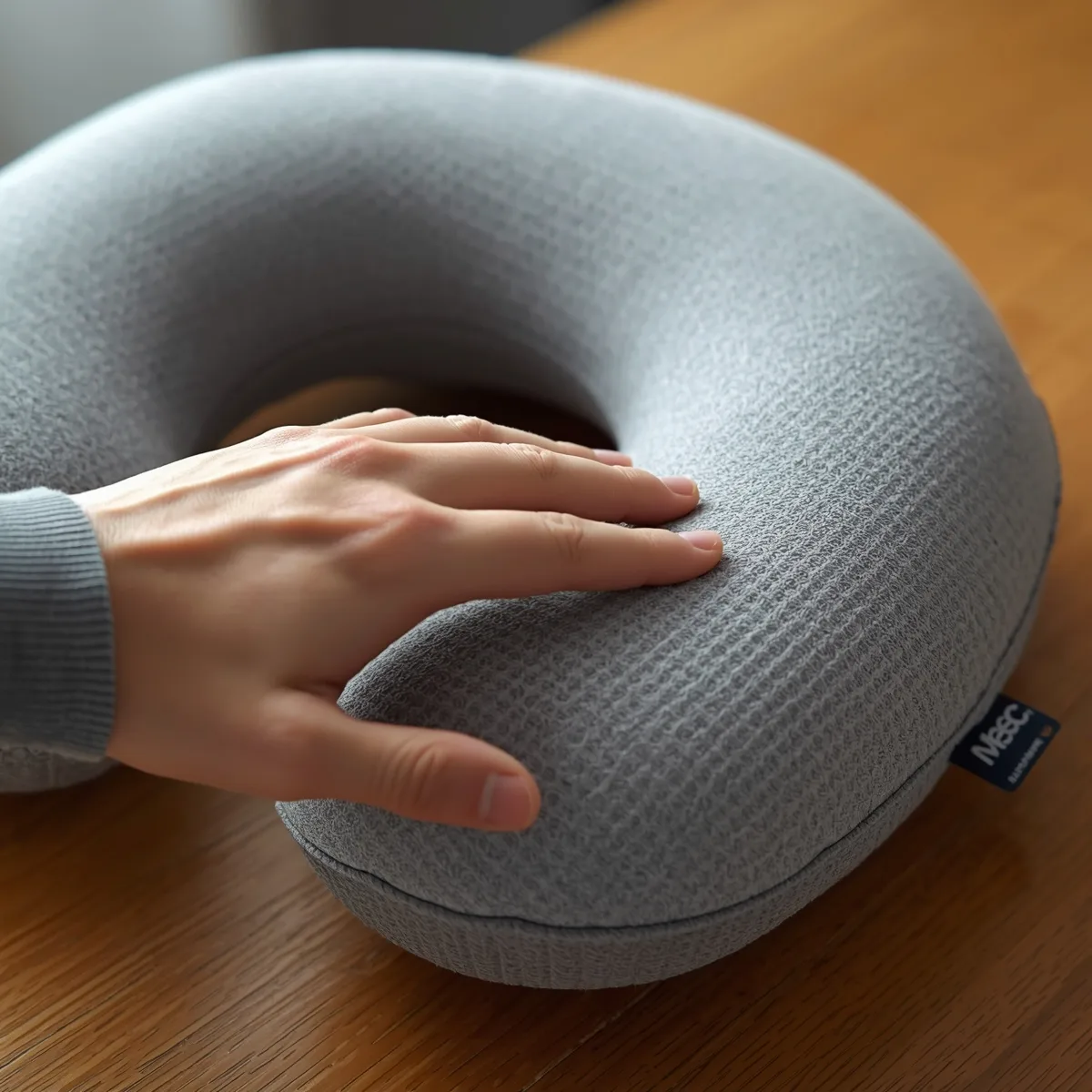
Two identical-looking pillows can behave completely differently, and density is why. Low-density foam (under about 40 kg/m³) feels plush in the shop and bottoms out under a real head an hour into the flight — you end up resting on your own collarbone with extra steps. Supportive travel foam lives around 45–55 kg/m³: slower to compress, faster to recover, and still holding shape at hour six.
The shop-floor test is simple: squeeze the pillow flat and count its recovery. Two to four seconds of slow, even return is the good sign. Instant spring-back means cheap bouncy foam; a permanent handprint means the opposite failure. Neither will hold a head at 3 a.m. over the Atlantic.
Heat is the other density story — denser foam sleeps warmer, which is why our covers are wicking and removable rather than why our foam is worse. A pillow you can't wash after a fourteen-hour flight through three airports is a biology experiment with a strap.
Fit: measure your neck, not the display rack
Travel pillows fail quietly when they're the wrong height for the wearer. The gap the pillow needs to fill is between the top of your shoulder and the base of your skull — typically 10 to 14 centimeters, and different on nearly every body. Too tall and it shoves your head forward into the exact posture it should prevent; too short and your ear reaches for a shoulder that's still two centimeters away.
The sixty-second fit check: sit upright against a wall, relax your shoulders, and measure from shoulder-top to the bony bump at your skull base. Under 11 centimeters, buy the low-profile cut; over 13, the tall. In between, either works and preference wins. We list the supported range on every product because 'one size' was always marketing.
Collar height matters twice for side-sleep converts — people who sleep on their side at home and expect to sleep somehow on a plane. The higher collar effectively brings the shoulder up to meet the head, which is the closest an economy seat gets to side-sleeping physics.
Wear position is the last fit variable, and it's free: the closure belongs under the chin for the forward nod, rotated toward the window for a committed lean, and many long-haul veterans flip the whole pillow a quarter turn at the halfway meal to change which muscles carry the load. A pillow that only works in one orientation was fitted to a mannequin; necks appreciate options at hour nine.
Packability: the pillow you leave behind helps nobody
The best pillow is the one that's actually with you at hour nine, and that's a luggage negotiation. Memory foam compresses to roughly a third of its volume in a decent compression bag and recovers in minutes; inflatables pack smaller still but trade away the support density that was the whole point. Our foam models pack to a 1.5-litre pouch — a large grapefruit — and clip outside the bag anyway.
Weight is the sneaky spec: anything past 400 grams starts losing the 'just bring it' argument on short trips. Ours run 280–350 depending on cut. And the clip matters more than it looks — a pillow clipped to the strap survives the security-tray scramble; a loose one is a gift to seat 34A.
For the minimalists: yes, a rolled hoodie works, for about ninety minutes, which is precisely one episode short of when you need it to. We say this with love and a drawer full of failed hoodie experiments.
One packing habit worth stealing from cabin crew: the pillow rides clipped outside the bag until boarding, then lives on your neck from pushback — not in the overhead bin where retrieving it at hour three means waking two strangers. Gear you can't reach when sleep arrives is gear you left at home with extra steps.
Trains, cars, sofas: where the pillow earns rent between flights
The same forward-nod physics applies anywhere a person sleeps sitting up: passenger seats on road trips, train window seats, the long-haul bus, the grandparent armchair after lunch. A pillow that only justifies itself twice a year on flights is a poor tenant; one that lives in the car door pocket earns its price monthly.
Two honest non-plane notes: drivers must never wear one (neck mobility is a safety system; passengers only), and for office naps the low-profile cut doubles as respectable lumbar support in most desk chairs — an off-label use our customers taught us.
This is also the answer to 'is it worth it for one trip a year': probably not, and we'd rather say so. It's worth it the week it becomes the household's default sitting-up-sleep tool. Most of ours do.
The seat strategy: where you sit is half the sleep
The pillow is half the equation; the seat is the other half, and it's bookable. Window seats win for sleep by a distance — a wall to lean toward, control of the shade, and immunity from the aisle's meal carts, elbows, and apologetic climbers. The left-side window edges out the right for most people, matching the natural lean of a head that's used to sleeping on its usual side of the bed.
Row position matters more than boarding groups suggest. Ahead of the wing is quietest; over the wing is smoothest in turbulence (the aircraft pivots around you instead of swinging you); the back combines the worst of engine noise, galley light, and late meal service with the one perk nobody prices — higher odds of an empty neighbor seat on undersold flights. Pick your poison by route: red-eyes over oceans favor smooth-and-quiet, half-empty Tuesday hops favor the gamble.
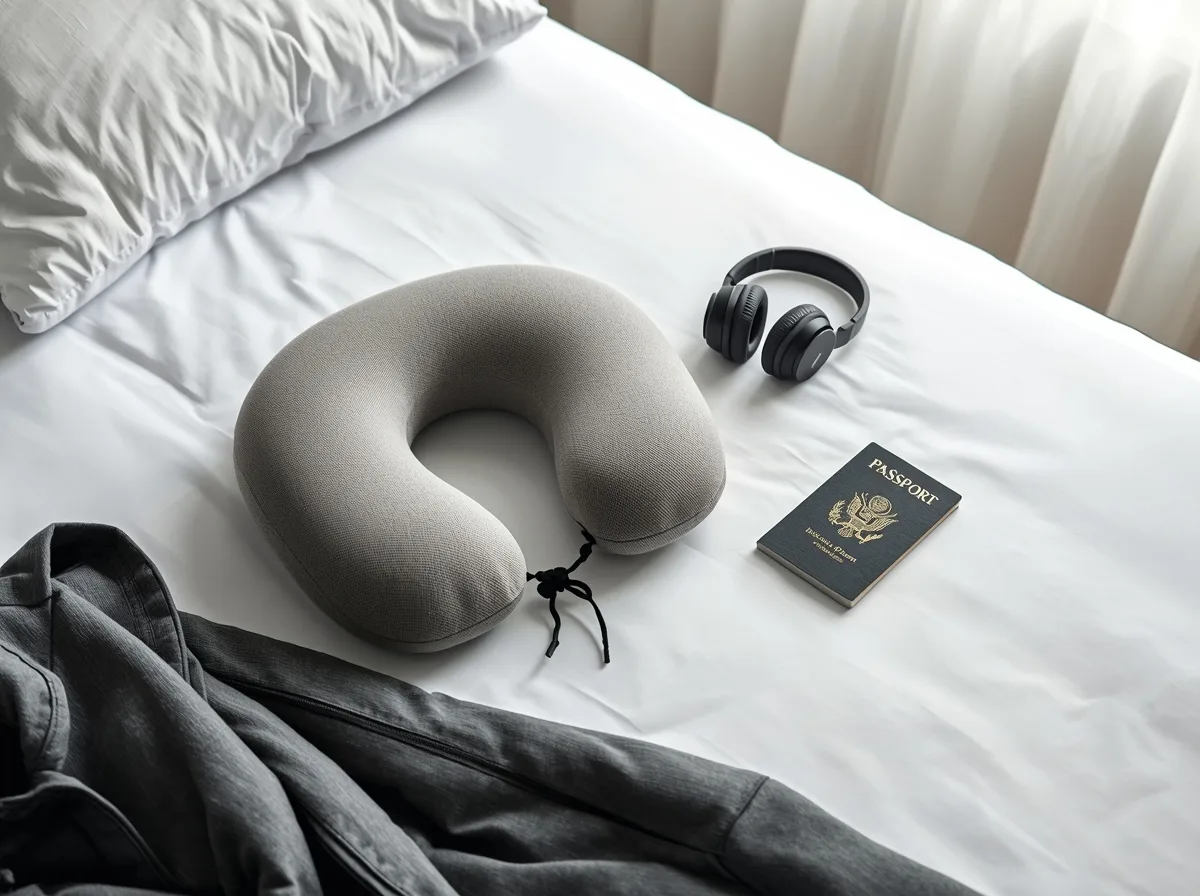
Then run the pre-sleep checklist like a pilot: seatbelt fastened visibly over the blanket (or the crew will wake you to check), shade down, pillow's chin shelf seated before the meal service ends rather than after the lights dim, and headphones on with something already playing — the cabin's own noise floor is what jolts light sleepers, and masking it beats fighting it. Rested on landing is a system, and every part of it is under your control except the crying baby, for whom we have no product and sincere sympathy.
What sitting-up sleep can and can't give you
Honesty about the ceiling: upright sleep is lighter sleep. Sitting posture keeps enough muscle engagement that most people cycle through the shallower stages and get less of the deep, restorative kind — which is why even a 'good' plane sleep lands you functional rather than refreshed. The pillow's job is to raise the floor, not fake a bed: fewer wake-ups, no neck penalty, and enough continuous light sleep to matter.
The realistic target on a long-haul is three to five usable hours, banked in stretches long enough to complete sleep cycles instead of the twenty-minute fragments the forward nod enforces. That difference — fragments versus stretches — is nearly the entire gap between arriving wrecked and arriving merely tired, and it's exactly the gap chin support closes.
Pair the pillow with the two free multipliers: timing your sleep window to the destination's night (start adjusting on the plane, not after landing) and declining the second coffee that feels earned at hour two and costs you the sleep window at hour four. The pillow holds your head; the planning holds the schedule.
The Nodguard — Chin-Support Foam Pillow
$44
Our flagship forward-closure pillow: 50 kg/m³ slow-recovery foam, a jaw shelf that catches the nod, wicking washable cover, and a compression pouch the size of a grapefruit. Low and tall profiles, sized by your actual neck measurement.
- Front-closure jaw shelf — built for the forward nod
- 50 kg/m³ foam: 2–4 s slow recovery, hour-six support
- Removable wicking cover, machine washable
- Packs to 1.5 L pouch, 320 g, security-proof clip
- Low (10–12 cm) and tall (12–14.5 cm) profiles
Get the Nodguard Before you board
How is this different from the U-pillow I already own?
The front. Classic U-pillows are open exactly where a sleeping head actually falls — forward. The Nodguard closes under the chin with a supportive shelf, so when your neck muscles let go, your jaw lands on foam instead of your chest. It's one geometric change and it's most of the difference.
Which profile should I order?
Measure from the top of your shoulder to the bony bump at the base of your skull while sitting upright. Under 12 centimeters, take the low profile; over 12, the tall. It's a sixty-second measurement that prevents the two classic failures — head shoved forward, or ear reaching for a shoulder it can't find.
Memory foam or inflatable?
Foam, if sleep is the goal — density is what holds a five-kilo head, and air chambers can't fake it. Inflatables win only when packed size beats everything else. Our foam compresses to about a grapefruit, which for most travelers retires the debate.
Can I wash it?
The cover, yes — machine wash cold, air dry, and please do after long-hauls. The foam core itself should stay out of the machine; spot-clean and air it. That's exactly why the cover zips off.
Will it work in a car or on a train?
Anywhere a passenger sleeps sitting up — cars, trains, buses, armchairs. The one hard rule: passengers only, never the driver. Neck mobility is a safety system when you're the one steering.
What if it doesn't fit my neck after all?
Swap or refund within 45 days, no interrogation. Fit is a measurement, but comfort is a verdict only your neck can deliver, and we'd rather eat the return shipping than have you not bring the pillow.
The red-eye survival sheet
The neck-measurement guide, the seat-by-seat sleep strategy (window beats aisle, and why), and early access when new cuts ship. One email, then quiet.